
Why Us?
Insulation isn't only about what goes inside a wall or attic. It's about controlling how heat and air move through the building.
Insulation Is Part of a Bigger System
Your roof, walls, ceilings, windows, doors and insulation work together as the building envelope: the boundary between indoor conditions and the environment outside.
Traditional insulation primarily slows heat transfer. Metal Building Insulation can also help control unwanted air movement when installed as part of an appropriate assembly.
The Air-Sealing Difference
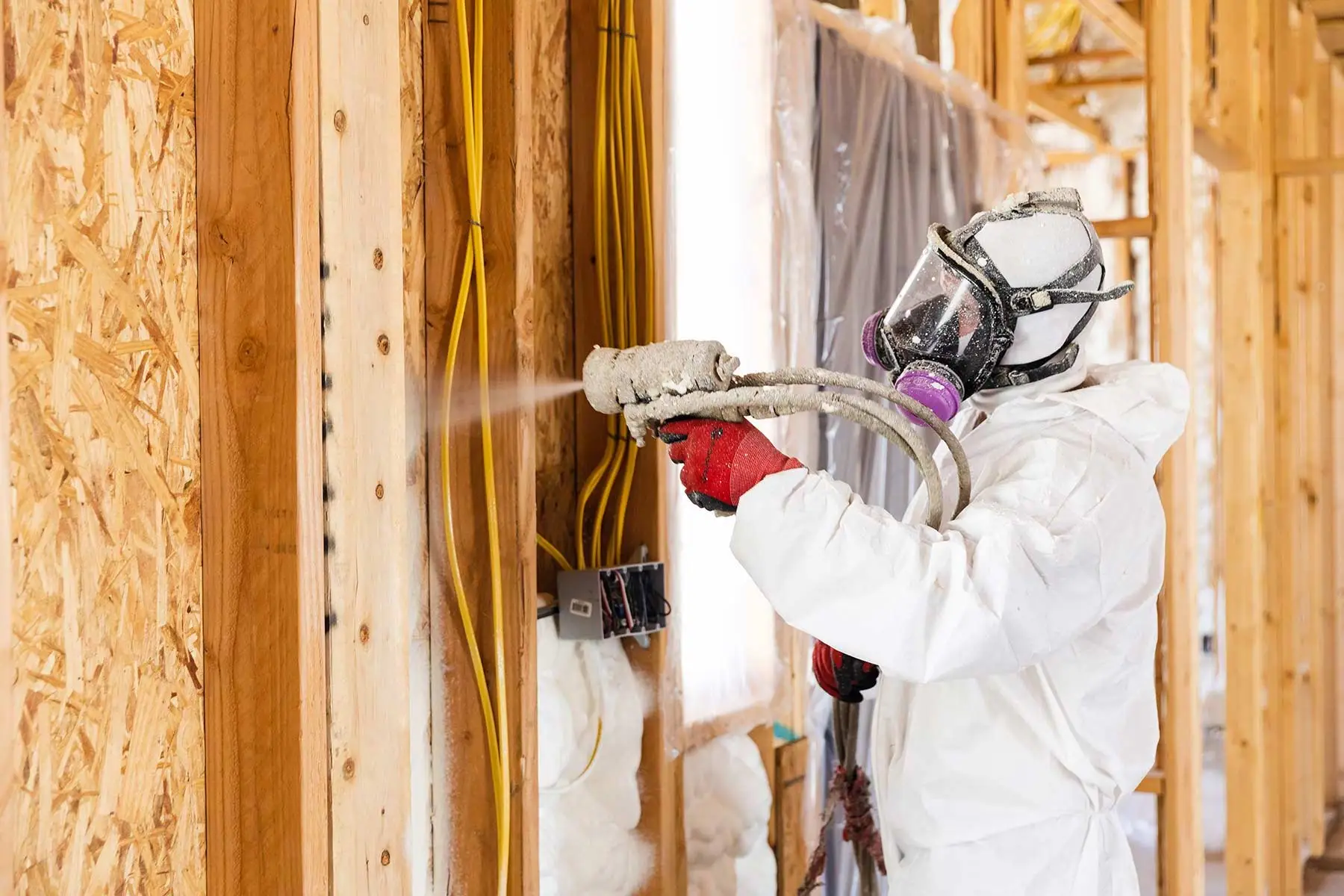
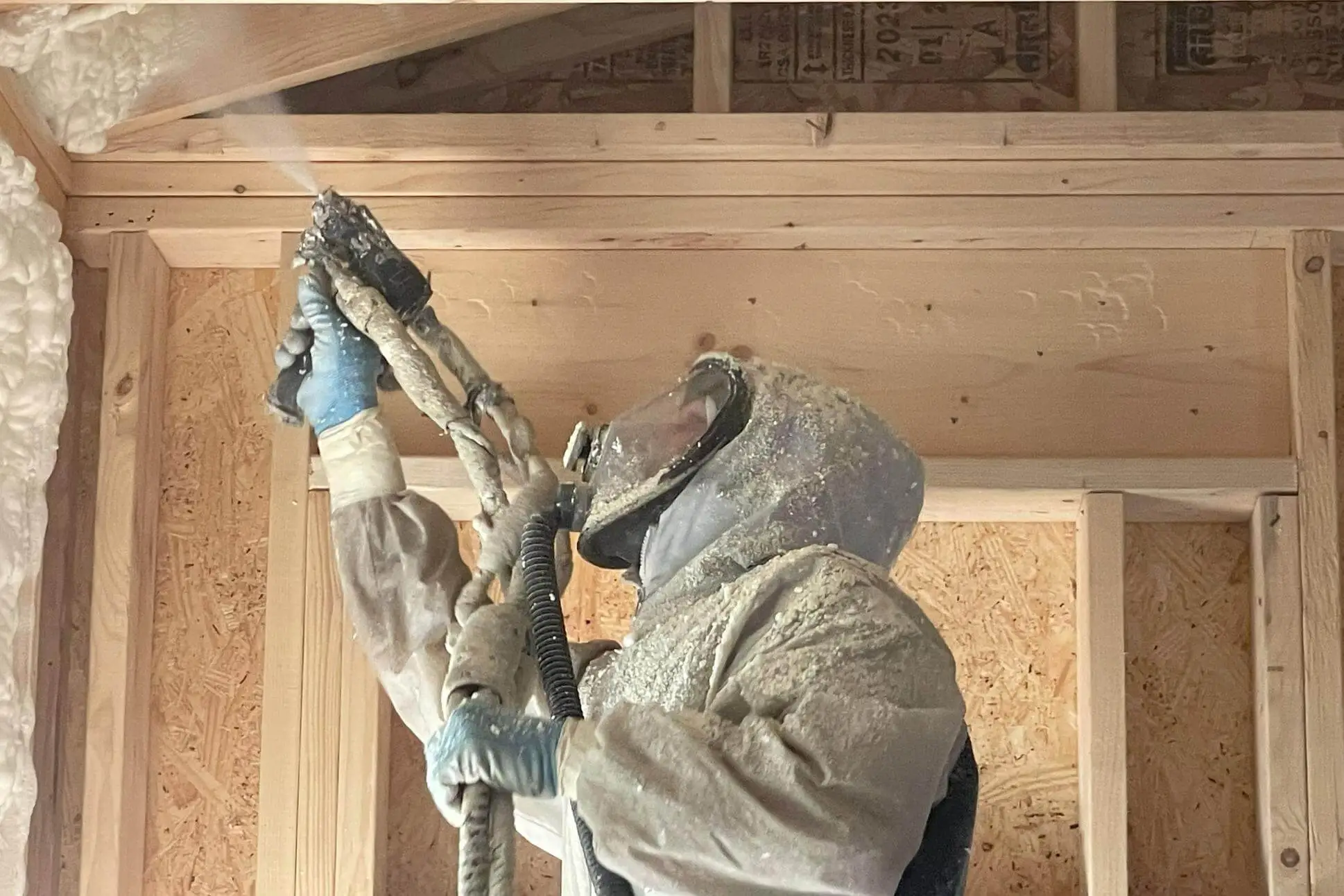
Metal Building Insulation expands during installation, allowing it to fill irregular spaces and help create an air barrier where properly applied. That combination of insulation and air control is what sets it apart, without meaning fiberglass or cellulose have no place.
How Does Metal Building Insulation Compare?
Metal Building Insulation
- Insulation plus air-sealing capability
- Expands to conform to irregular areas
- Professional installation required
- Higher initial cost than some options
Fiberglass
- Widely used, batt or blown
- Primarily thermal insulation
- Can perform well when properly installed
- Air sealing may need separate measures
Cellulose
- Loose-fill or dense-pack
- Common in attics and retrofits
- Primarily thermal insulation
- Air control depends on the assembly
The right choice depends on the building, the assembly and the project goal.
What This Means for Wichita Buildings
Wichita sits in a climate that loads a building from both directions: sustained cooling demand through humid summers, then a long heating season where warm air escapes through the attic and roof assembly. Open plains wind drives air leakage year round, so gaps that look minor cost money in both seasons. That reorders the priorities: the attic, the roof deck and the service runs above your ceiling are usually where the decision matters most, and the walls are a secondary question.
Metal Building Insulation Isn't a One-Size-Fits-All Decision
The right answer depends on the existing assembly, moisture strategy, roof and attic design, ventilation, existing insulation, accessibility, project goals, budget, local code, and whether it's retrofit or new construction.
The first question shouldn't be how much product we can sell you. It should be what the building is trying to do. Sometimes metal building insulation is an excellent fit. Sometimes the assembly needs more evaluation first.
Talk to an Insulation ProfessionalQuestions People Ask Before Choosing Metal Building Insulation
Is metal building insulation safe after installation?
Once cured, it is a stable part of the assembly. Re-entry guidance can vary by product and manufacturer, so follow the specific product guidance for your project.
Does metal building insulation have an odor?
There can be an odor during and shortly after application that dissipates as the product cures.
Can it be installed in an existing home?
Yes. Existing homes and attics are common projects.
Does existing insulation need to be removed?
It depends on the assembly, condition and project plan. Some projects add to existing material; others start with removal.
Is open-cell or closed-cell better?
Neither is universally better. The right choice depends on where it is installed, the assembly and the project goal.
Is metal building insulation more expensive than fiberglass?
It often carries a higher initial cost than some traditional options, which is weighed against its insulation and air-sealing characteristics.
You Don't Have to Figure It Out Alone
Tell us about your property and what you're trying to improve.